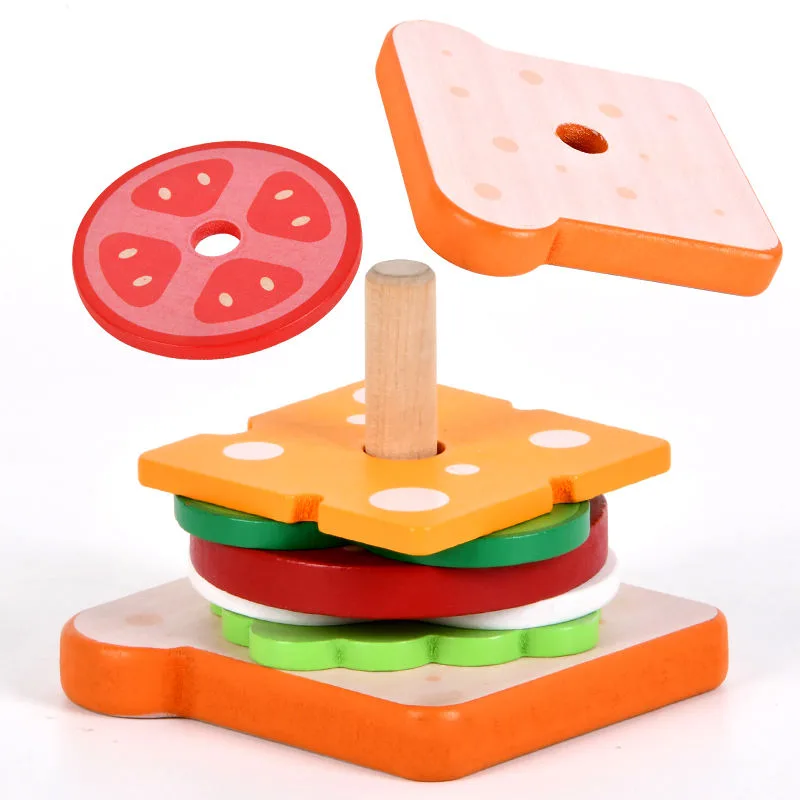
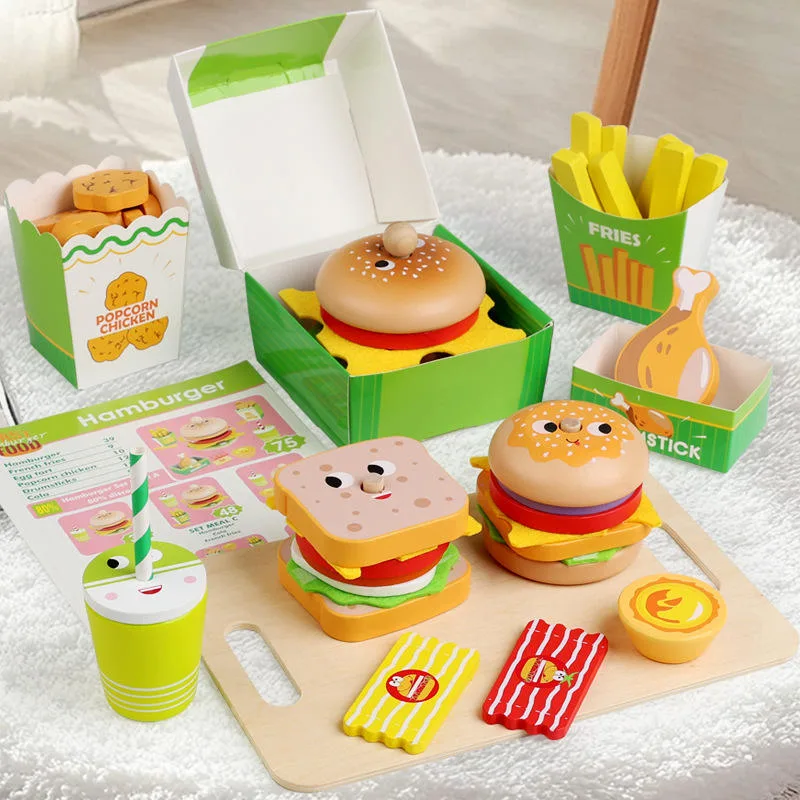
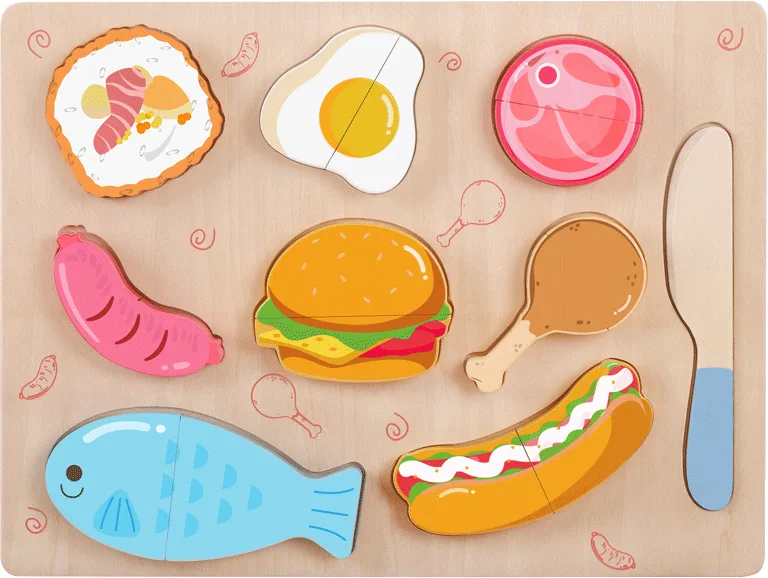
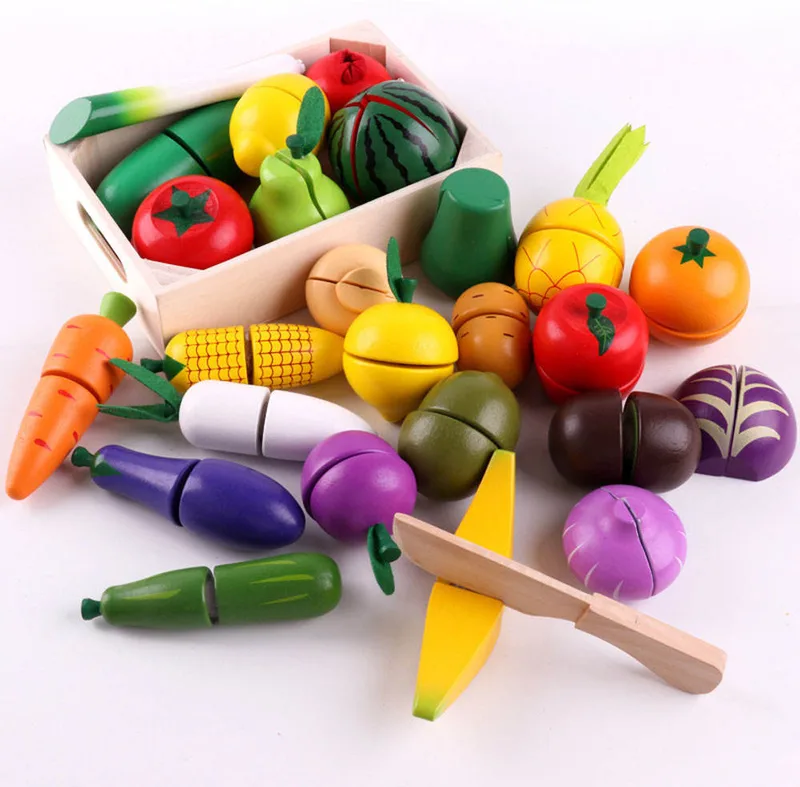
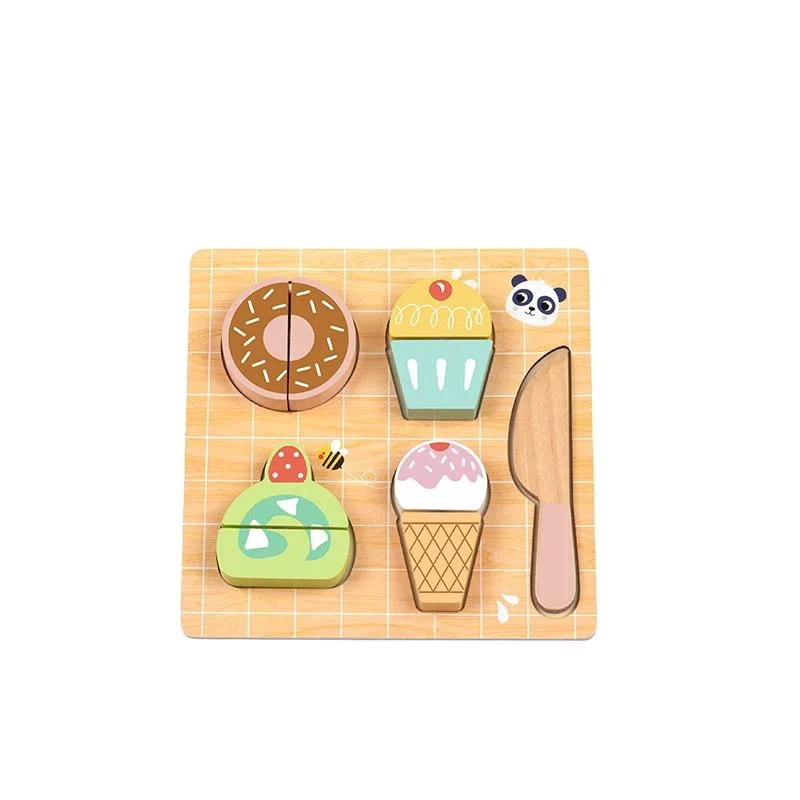
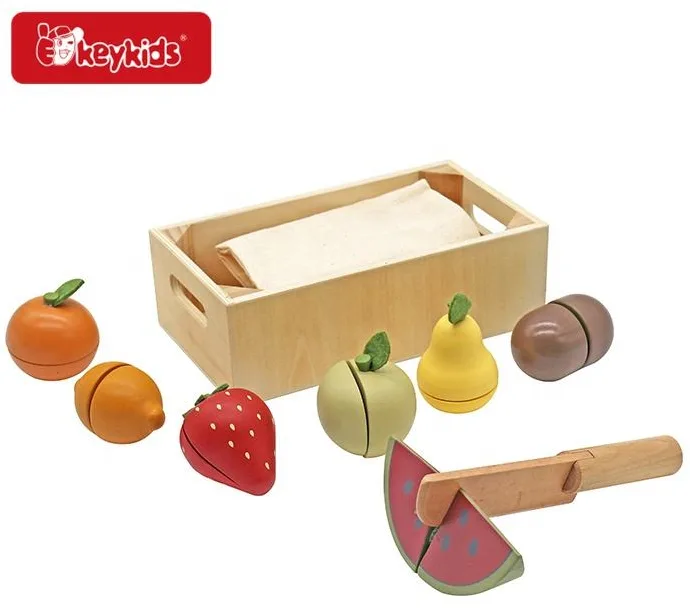
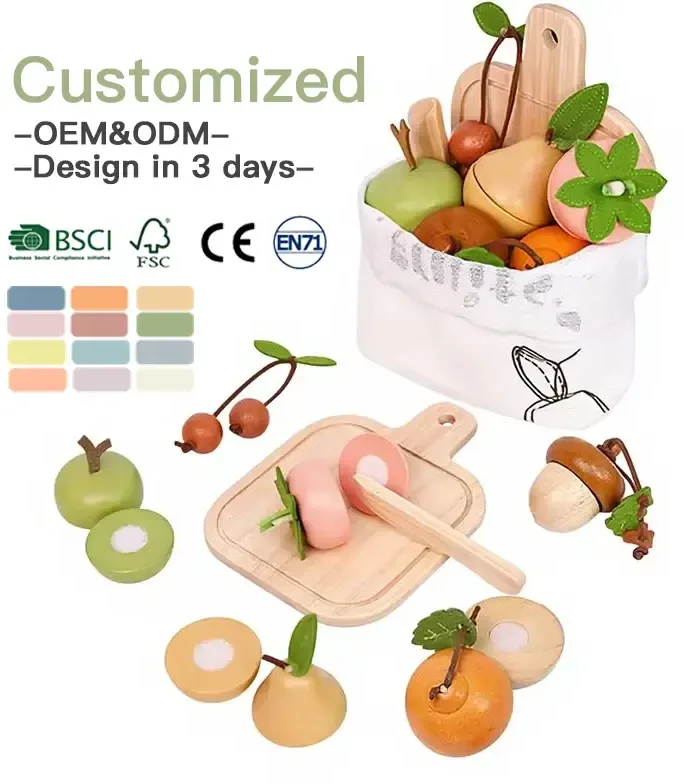
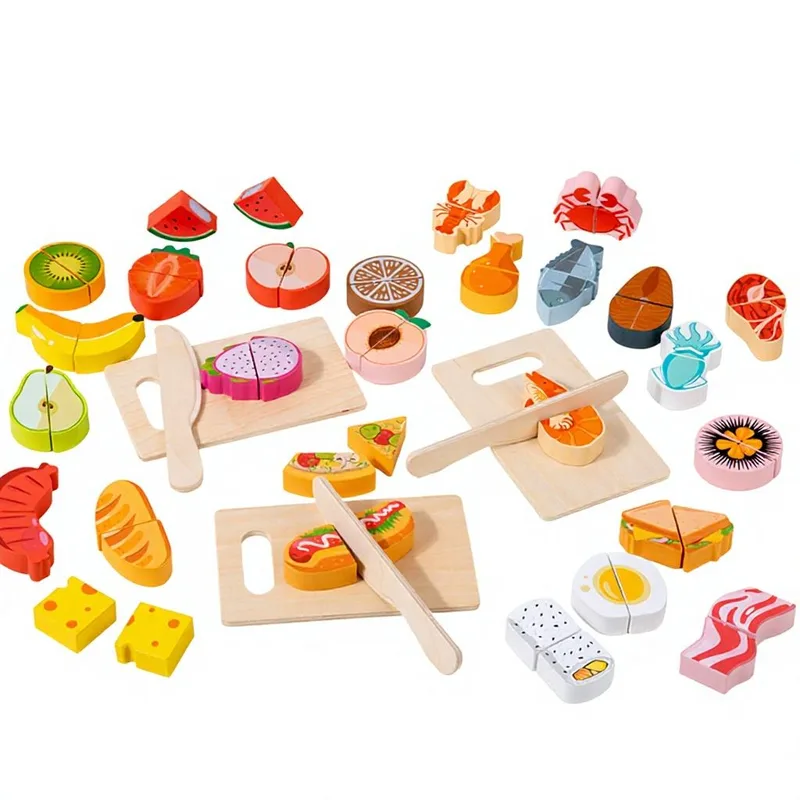
Wooden play food is the format with the smallest pieces and the longest specification sheet relative to its size. A cutting set is judged on whether the hook-and-loop joint still holds after fifty cuts, and a grocery set on whether the pieces scale with the pot it will be cooked in. Piece count, piece size, and small-parts scope are the three numbers that decide whether a set sells through, and none of them appear on the front of the box.
What the play food format covers
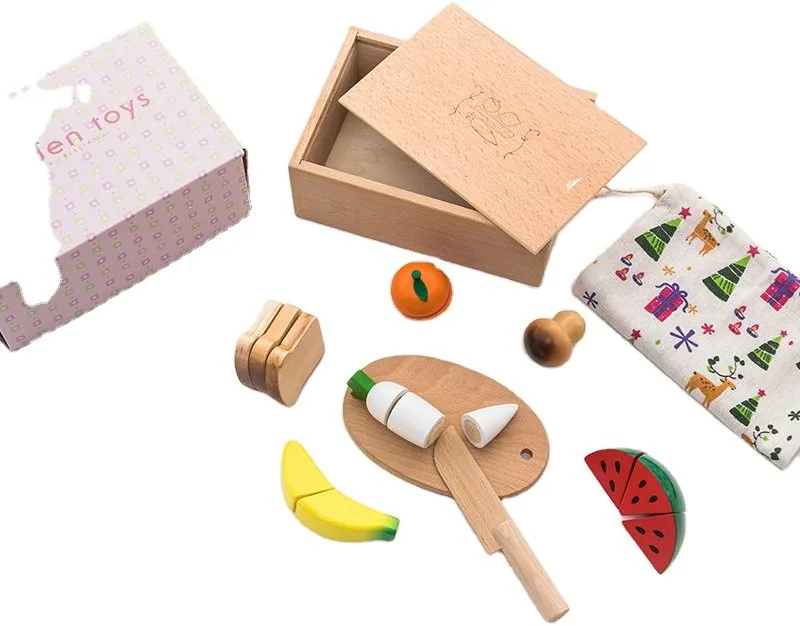
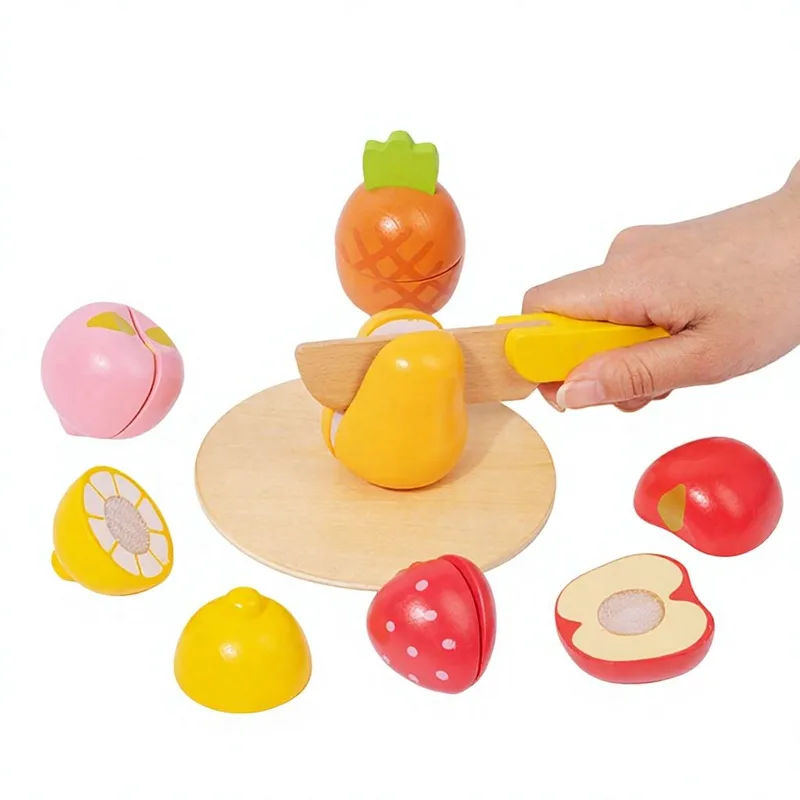
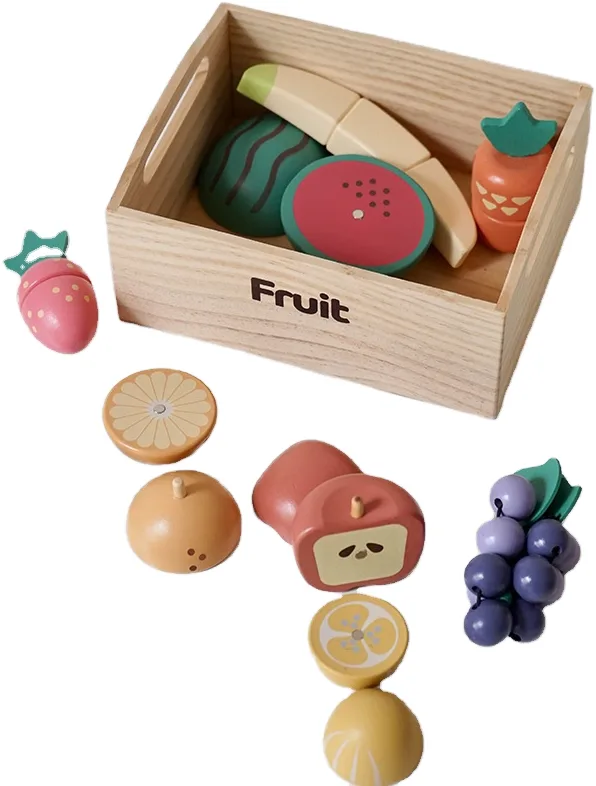
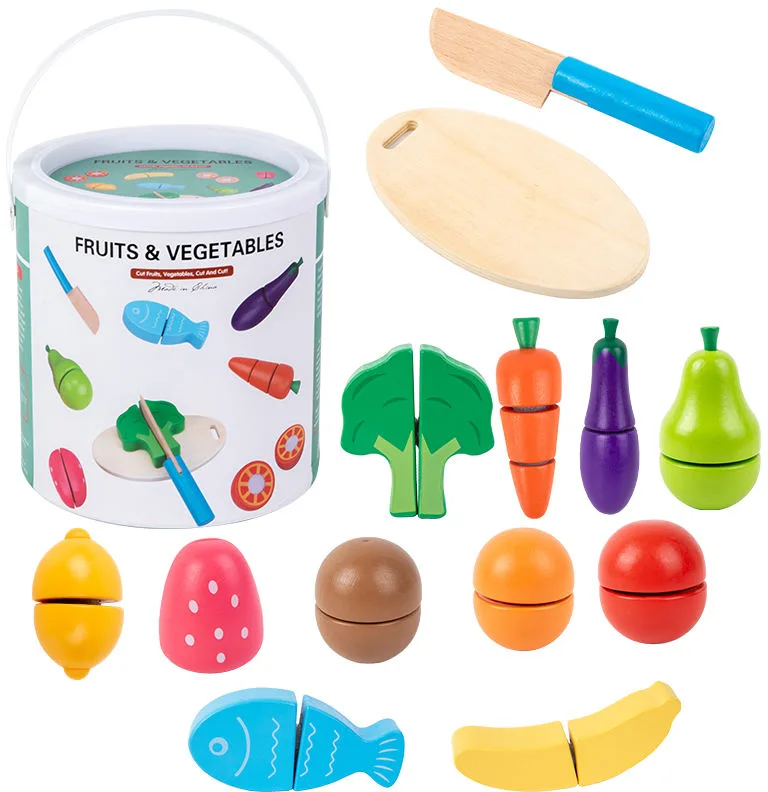
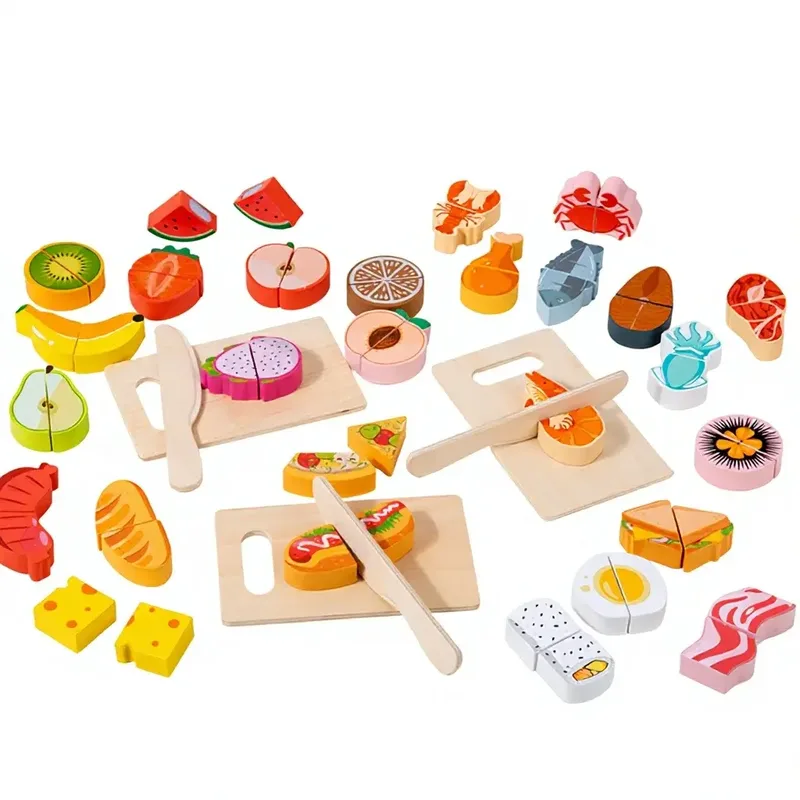
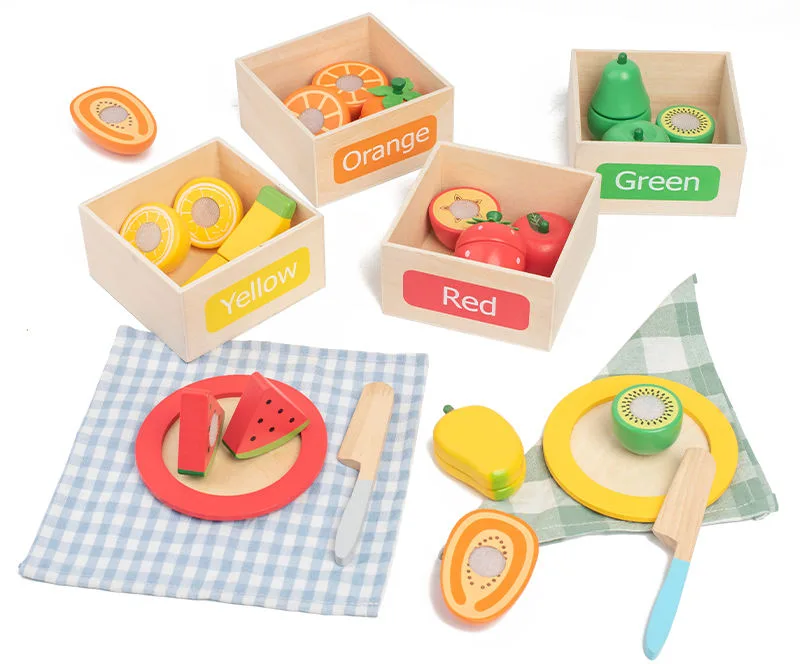
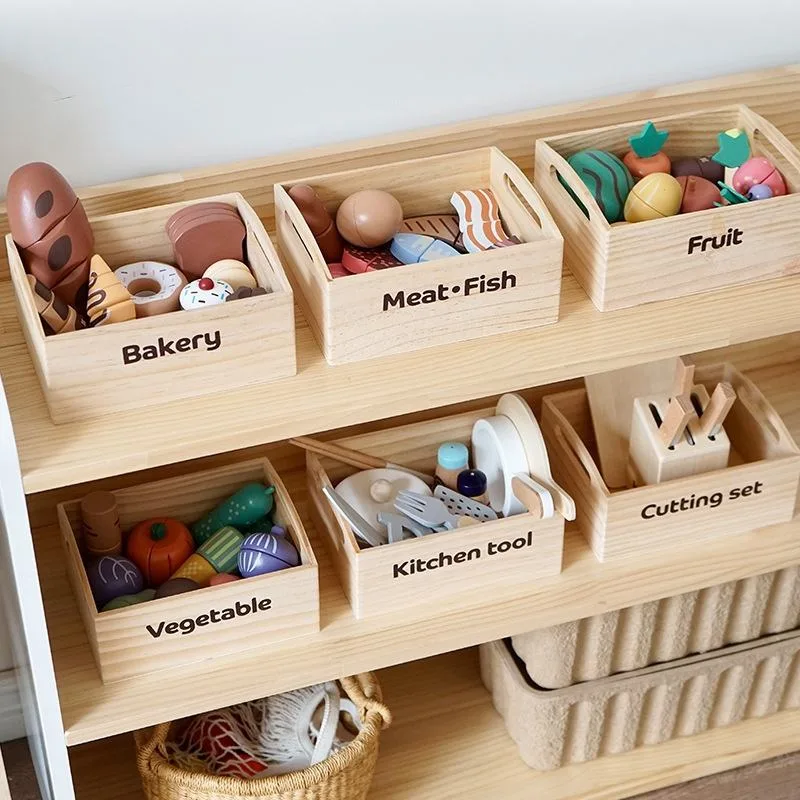
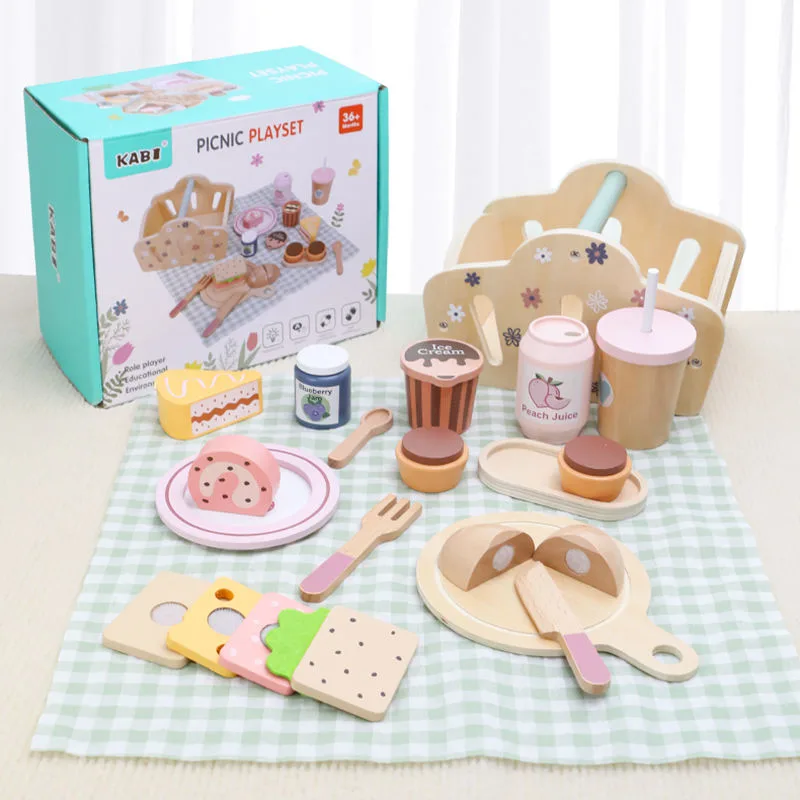
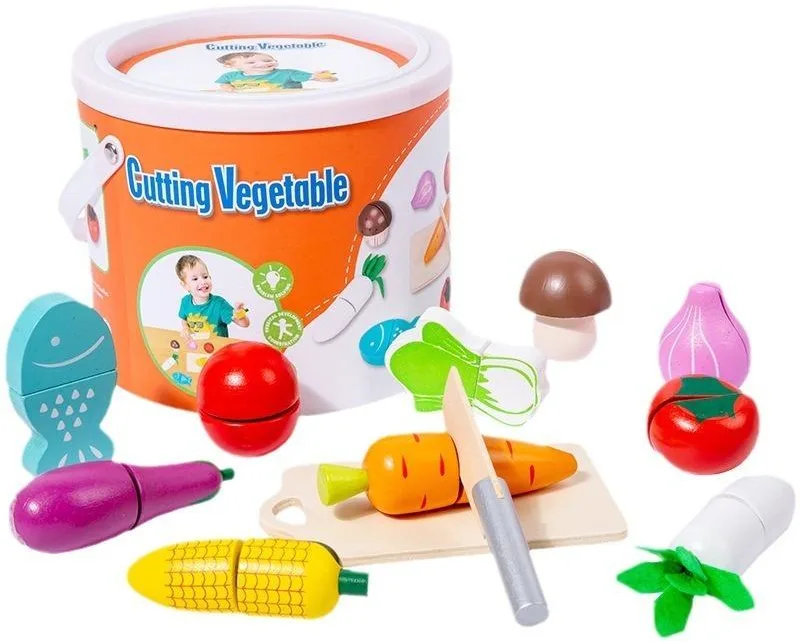
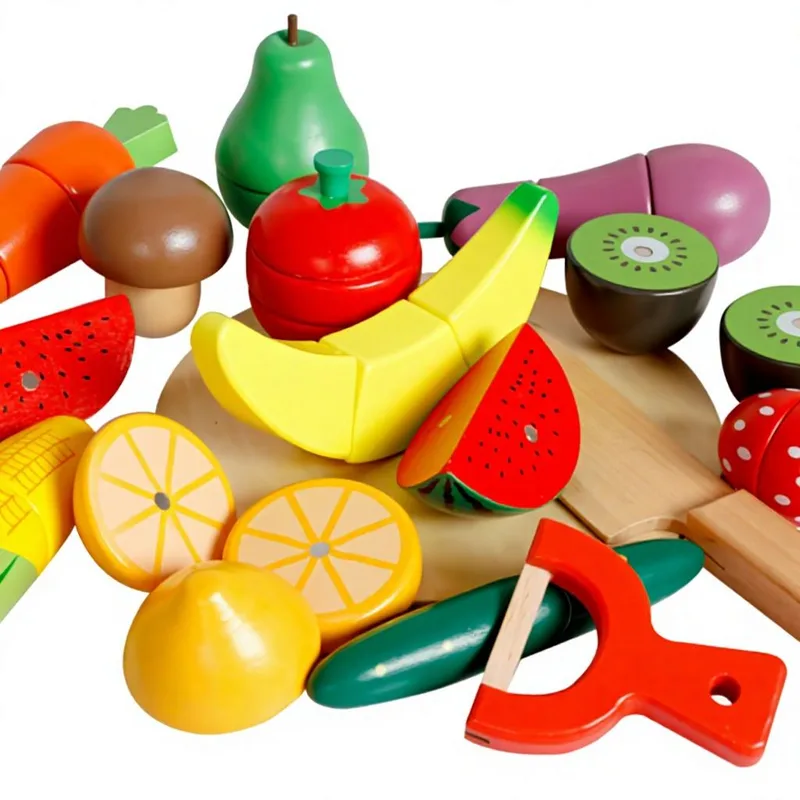
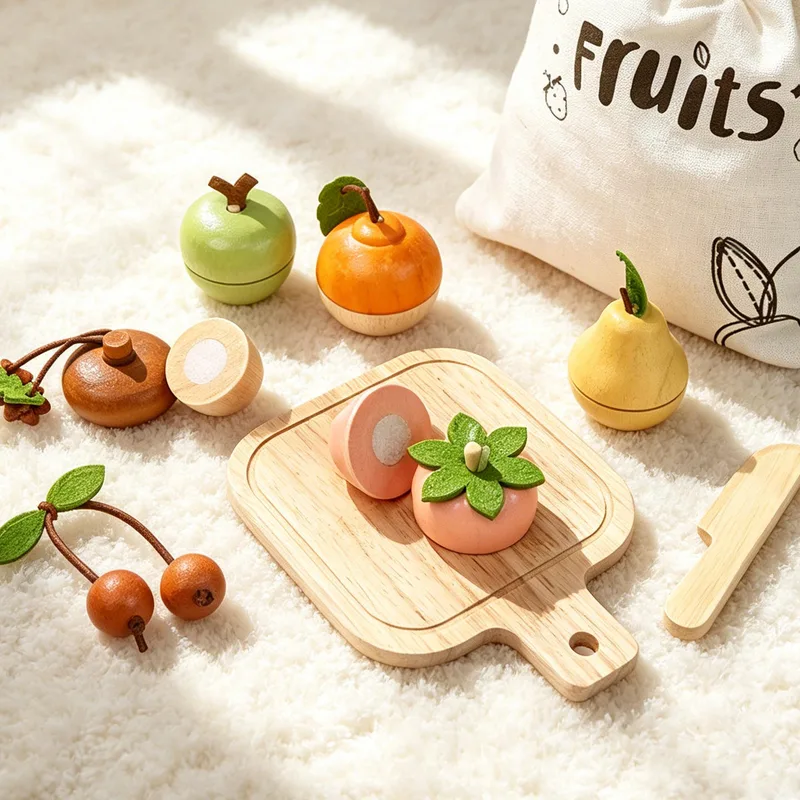
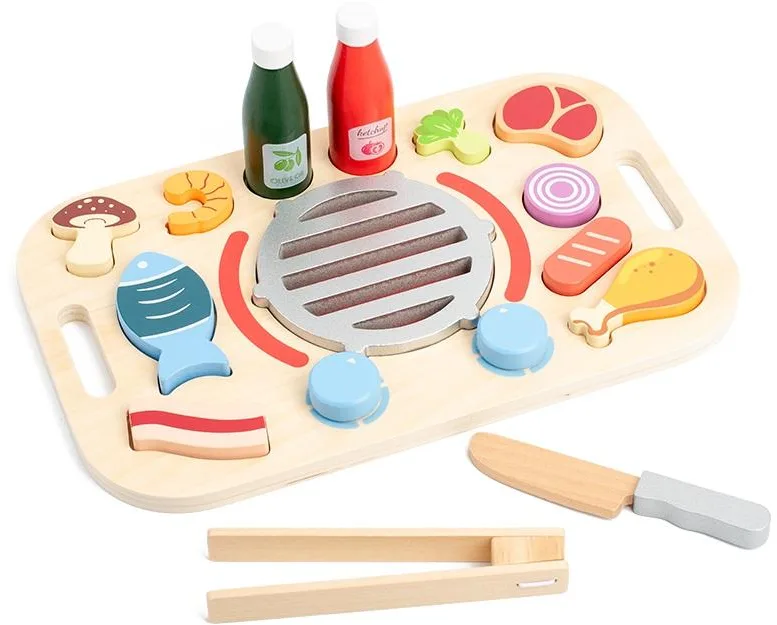
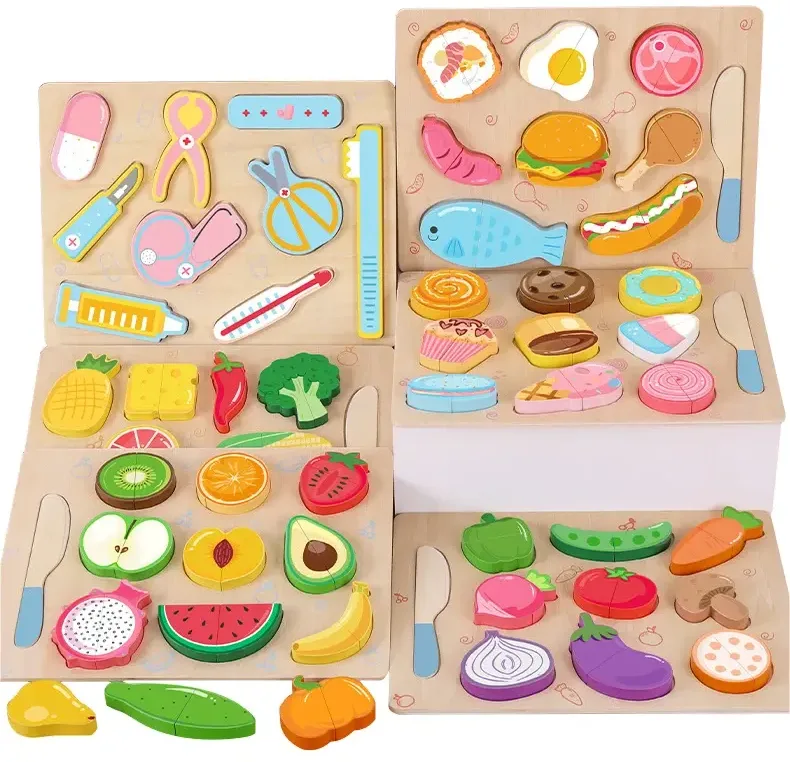
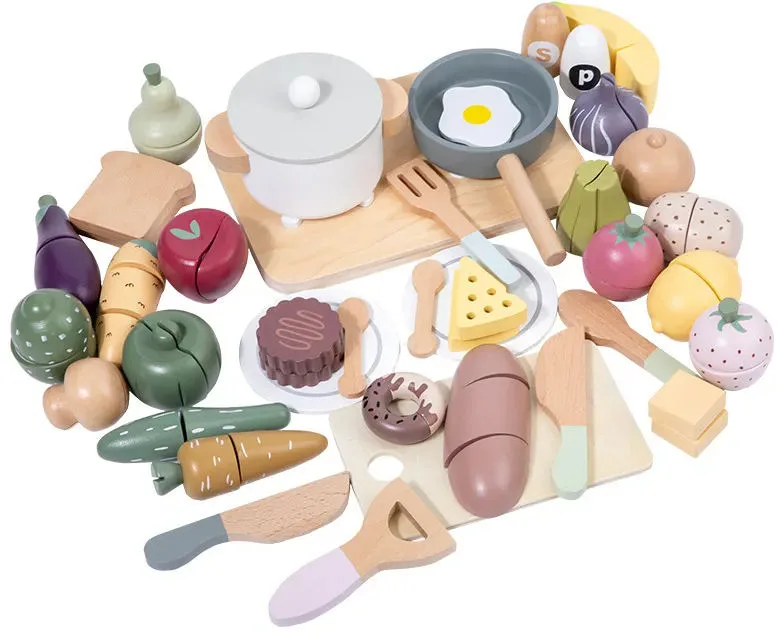
The category runs from single food pieces to sets of 40. The main groups are fruit and vegetables, cutting sets where a piece splits into halves with a play knife, bread and bakery items, groceries with printed labels, and drink or dessert sets such as coffee, tea, and ice cream. Many ranges combine two groups in one box, which is why piece counts climb quickly.
Joints are the technical core of the cutting sets: hook-and-loop pads, magnets, or a wooden peg. Hook-and-loop is the most common because it is inexpensive to fit and easy to replace, but it wears and picks up lint. Magnets hold a neater cut line but are a test item in every market, so their retention and fixing method need a written answer rather than an assumption.
Scale is the second core. Pieces are usually sized to sit inside a 10–14 cm (3.9–5.5 in) play cookware pot, and a set whose apple is 8 cm (3.1 in) across will not fit a small pan. Check food and cookware together when building a range.
How to choose the play food set
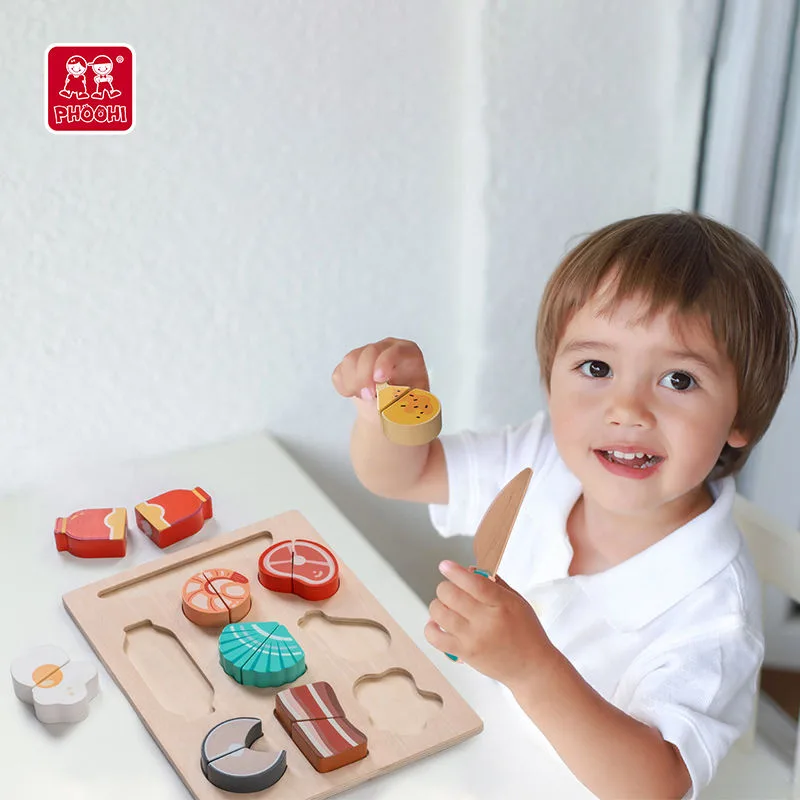
Choose the age band before the theme. Under-three channels should avoid cutting sets with loose small parts and stay with chunky single pieces; three and over can take a cutting set with a knife and halves. If the set is sold to a mixed-age household, the piece count and the small-parts warning on the carton have to be right, not the theme.
Then choose by play pattern. Cutting sets sell to home channels because the action is visible on the shelf. Grocery and bakery sets sell to preschool and education channels because they support menu and shop role-play, and those buyers usually want duplicates of bread, fruit, and vegetables rather than one of everything.
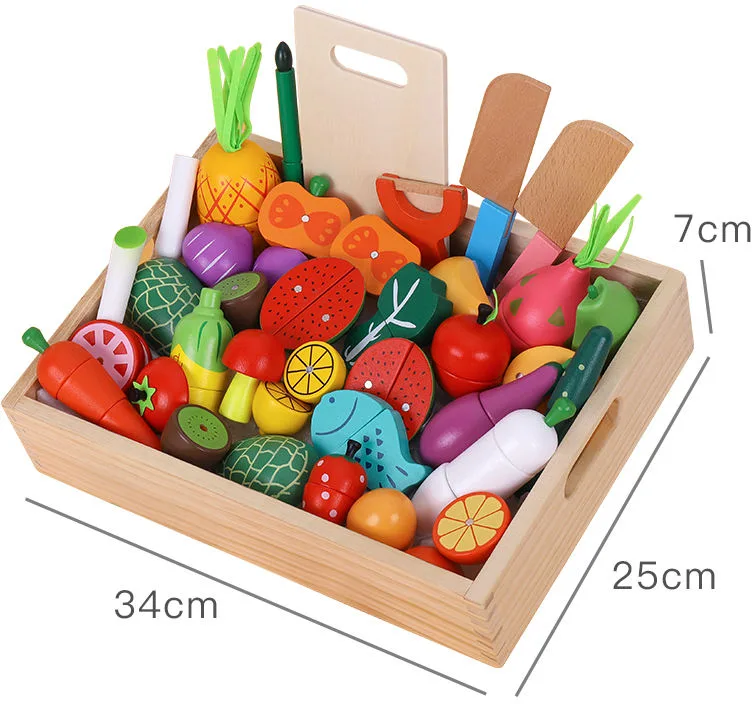
Piece count is the third decision, and it should match the carton. A 40-piece set in a shallow carton needs a divider or a tray; a 12-piece set can ship loose in a box. Ask for the packed piece layout, not just the count.
The set also has to survive play: paint on cut faces, joint pads, and printed labels are the three wear points. Spare joint pads are worth adding to a range order — the maintenance and spare parts page explains how to plan that, and the accessories checklist lists which food types are worth duplicating.
Dimensions and footprint
Play food has no footprint, so it is quoted by piece count and largest piece. The largest piece is what determines carton height and whether the set is a gift box or a bulk carton.
| Specification | Typical range (cm) | Typical range (in) | Confirm with the supplier |
|---|---|---|---|
| Cutting piece length | 6–12 | 2.4–4.7 | Halves joined, per piece |
| Fruit and vegetable size | 4–8 | 1.6–3.1 | Longest dimension |
| Bread and bakery length | 8–18 | 3.1–7.1 | Largest piece in the set |
| Piece count per set | 8–40 | — | Count halves and knives |
| Set gross weight | 0.3–2 kg | 0.7–4.4 lb | Typical per set |
| Carton size | 18–40 × 12–28 × 6–15 | 7.1–15.7 × 4.7–11.0 × 2.4–5.9 | Per set, typical |
All figures are typical and confirmed per model. The dimensions data page holds the kitchen and cookware baselines the pieces should match, and a scale claim is best checked against a measured piece rather than a listing photo.
Packing, CBM, and MOQ
Play food is the most freight-efficient format on the site. A 20-piece set in a 25 × 18 × 8 cm (9.8 × 7.1 × 3.1 in) box is 0.0036 CBM, so 1,000 sets are roughly 3.6 CBM and the limit on a container is weight and picking, not volume. Because the cartons are small, mixed-carton packing is common: several food SKUs per outer, which changes both the barcode layout and how a distributor replenishes.
Piece count should be verified, not accepted. Sets are often described by the number of play pieces, with the knife and the tray excluded, and half-pieces counted as one. Put the piece list in the specification sheet with each item named, then have the sample counted against it; a mismatch of four pieces on a 40-piece set is a returns problem that starts with the copy on the box.
MOQ for play food is typically the highest on the site because each set is inexpensive to produce and ships in a small carton: common bands run 300–500 sets per design, with lower quantities on stock designs or plain cartons. Lead time is typically 25–40 days from sample confirmation. Confirm both figures per model; the procurement checklist covers the sequence from sample to shipment.
Common misjudgments
- Counting halves, knives, and trays inconsistently, so the box copy, the specification sheet, and the actual set disagree.
- Choosing a cutting set for an under-three channel that cannot take the small parts.
- Assuming hook-and-loop joints are maintenance-free; they wear and need a spare-pad line.
- Ignoring magnet fixing on magnetic cutting sets, where retention is a test item in every market.
- Scaling food against a photo of a kitchen rather than against the actual pot diameter.
- Packing a 40-piece set loose in a shallow carton and losing pieces in transit.
Wooden play food is where a range gains play value at low freight, and where small errors in piece lists cost the most in service. Confirm the piece list, joint type, largest piece, carton layout, and MOQ in writing, then align the set with the cookware and the kitchen height; the magnet and small-parts checks are set out in the safety standards guide. Browse the catalogue or send a set list through the quote request.